Private multispecialist dentistry · By consultation

Dentistry for decisions that deserve a room of specialists.

Complex reconstruction, advanced implant care and aesthetic rehabilitation—planned as one case, not a chain of disconnected appointments.

Explore complex care

Not designed for volume.
Designed for complexity.

Some cases need a prosthodontic plan, surgical insight, periodontal stability, endodontic preservation and laboratory precision at the same table. Aurelis is a concept built around that level of coordination.

1case director
5specialist disciplines
1coordinated plan

High-consequence dentistry,
carefully staged.

Treatment recommendations depend on examination, imaging where indicated, diagnosis and individual risk. These pathways are illustrative—not guarantees of suitability.

For extensively worn, failing or heavily restored dentitions, treatment may require coordinated rebuilding of tooth form, bite relationships and restorative space over multiple phases.

Digital recordsProvisional testingDefinitive ceramicsMaintenance plan

Advanced implant treatment is planned from the final restoration backwards, with surgical and restorative disciplines coordinated around anatomy, tissue health, biomechanics and long-term maintenance.

3D planningSpecialist surgeryProsthetic designRecall protocol

Aesthetic treatment begins with diagnosis, not a shade chart. Tooth position, tissue levels, enamel preservation, function and facial context guide whether ceramic treatment is appropriate and how conservative it can be.

Smile analysisMock-upLab communicationFinal refinement

Periodontal surgery may be used to manage recession, support tissue health and improve the biological foundation around teeth or implant sites. Aesthetic goals remain secondary to stability and diagnosis.

Tissue assessmentRoot coverageSite developmentMaintenance

When a strategically important tooth can reasonably be preserved, an endodontic specialist may use enhanced magnification and advanced diagnostics to evaluate complex canal anatomy, prior treatment or surgical options.

MicroscopyCBCT when indicatedRetreatmentRestorability review

One case.
Five perspectives.

The patient should not have to coordinate the specialists. The practice should. Aurelis is structured around a case director who brings the relevant disciplines into the plan before treatment begins.

01

Prosthodontics

Complex restorative planning, full-mouth rehabilitation, implant prosthetics and aesthetic reconstruction.

02

Periodontics & implant surgery

Periodontal health, grafting, implant-site development and surgical implant care.

03

Endodontics

Complex root canal treatment, retreatment and tooth-preservation decisions with magnification.

04

Oral & maxillofacial surgery

Surgical pathways for appropriate complex cases, with anesthesia options determined by clinician training and patient assessment.

05

Orthodontics

Tooth-position and bite correction where alignment can improve restorative space, biology or long-term function.

Dental laboratory technician crafting a restoration

THE ATELIER

Millimetres matter.
So does restraint.

A serious case deserves
a visible plan.

The sequence below shows how a complex treatment may be organized. Actual steps vary by diagnosis, specialist findings, medical status and procedure.

STAGE 01

Private assessment

A case director gathers your priorities, dental and medical history, clinical findings, photography, scans and imaging when indicated. The purpose is to define the problem before discussing solutions.

  • Case history and goals
  • Clinical examination
  • Digital records and imaging as indicated
  • Urgency and risk review
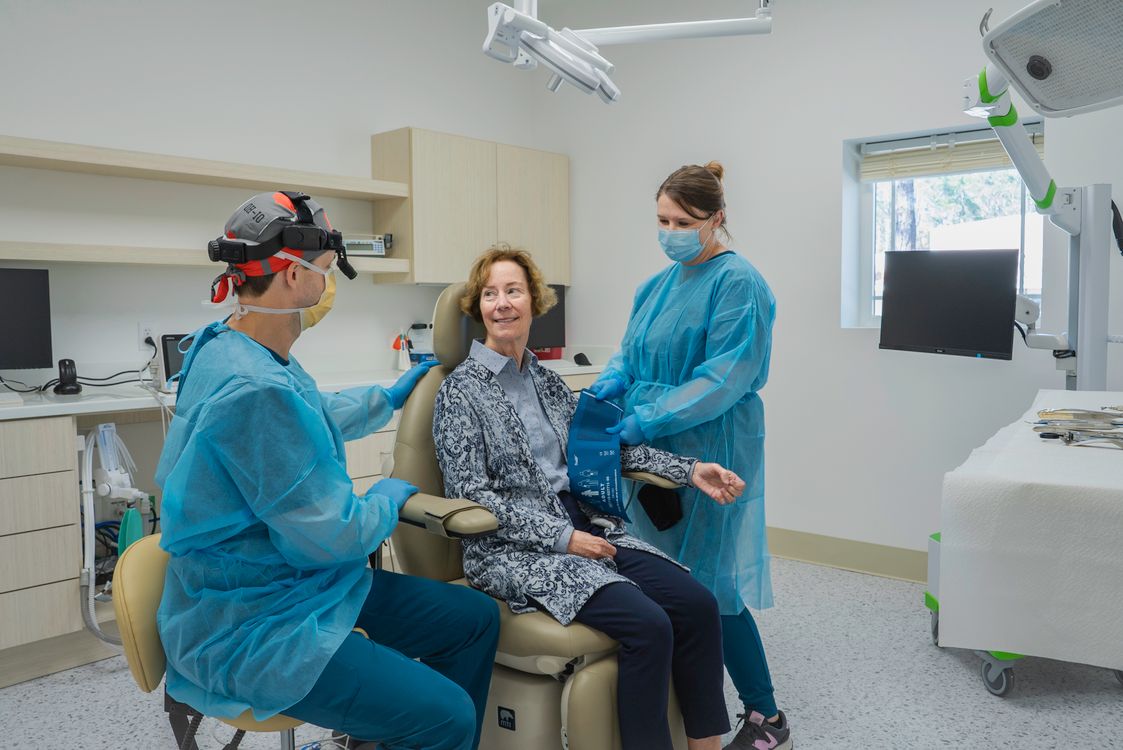
Dental team discussing care with a patient
Dental implant model used for patient educationRESTORATIVE-LED PLANNING

Technology should make care more deliberate, not more automatic.

Digital scans, photography, CBCT when clinically indicated, guided planning and laboratory workflows can improve communication between the surgical and restorative teams. They do not replace examination, diagnosis or clinical judgment.

Digital case recordsProvisional prototypesLab-to-clinic communicationRestorative maintenance planning

Private care without
the clinic chaos.

01

Single point of contact

A dedicated coordinator organizes records, specialist appointments, written treatment stages and follow-up communication.

02

Clustered scheduling

Where clinically sensible, appointments can be coordinated to reduce unnecessary visits for patients traveling or managing constrained schedules.

03

Discreet communication

Preference-led contact, clear documentation and a private treatment chronology reduce repeated explanations and administrative friction.

04

Comfort & sedation planning

Appropriate anesthesia or sedation options are discussed only after medical assessment and according to the treating clinician’s qualifications and applicable standards.

Complex dentistry should be priced after it is understood.

For multidisciplinary reconstruction, a responsible estimate depends on diagnosis, number of treatment stages, specialist involvement, surgical requirements, materials and maintenance needs. Aurelis does not present a one-price-fits-all menu for complex care.

Following diagnostic assessment, the patient receives a staged written plan outlining recommended treatment, alternatives, sequence and estimated fees before elective treatment begins.

Before you
begin.

Do I need to know which specialist I need?

No. A coordinated practice should begin with the problem, records and goals. The case director can determine which specialties need to be involved after assessment.

Can every failing dentition be treated with fixed full-arch implants?

No. Suitability depends on anatomy, periodontal and medical factors, restorative requirements, hygiene capability, risk and individual diagnosis. Alternatives should be discussed during treatment planning.

Are veneers always the best option for an expensive cosmetic case?

No. High-value aesthetic dentistry should still prioritize appropriate diagnosis and preservation of healthy tooth structure. Orthodontics, additive restorative approaches, whitening, bonding or no treatment may be preferable in some situations.

Can treatment be completed in a single visit?

Some procedures may be consolidated, but complex rehabilitation frequently requires diagnostic, provisional, healing and review phases. Speed should not override biological or restorative requirements.

Is sedation available for every procedure?

Not automatically. Sedation or anesthesia choices require medical assessment, informed consent, appropriate monitoring and a clinician/team qualified for the selected level of sedation.

If your case feels too complex
for a ten-minute consultation,
start here.

General information only. This concept website does not provide diagnosis, emergency care or individualized treatment advice.

Like this website?Build one for your brand View website catalogue